Project 2
Prototype Testing and Strategic Direction Through Ethnographic Immersions
@ The LEGO Group

Project Background
-
This was the first major project I lead since I joined Project Acorn at the Creative Play Lab, the LEGO Group.
- By the time I joined the project, the prototype had only been tested in a lab setting, where it was given to children for a fixed amount of time. It is difficult to gauge what their actual behaviours will be like in a naturalistic environment.
- At that time, the prototype was developed primarily for boys, with a focus on competition and battle-type play. However, the IP LEGO partnered with had rebranded towards a gender-neutral approach. There was a lack of understanding of how we might use the IP to engage girls effectively. Therefore, a much clearer understanding of our target audience is needed.
Objectives:
-
Bring Project Acorn closer to children by fostering empathy and enhancing stakeholder engagement.
-
Refine our persona through interactions with children in their natural environments.
-
Test our prototype with real-time feedback from children.
-
Evaluate the current pain points with the prototype and outline strategic directions for future iterations.
Methods
-
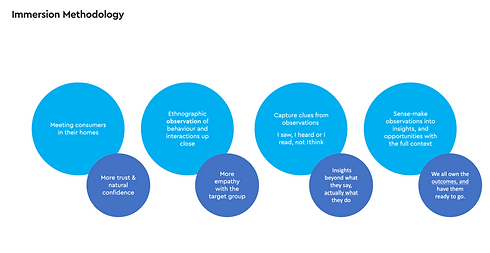
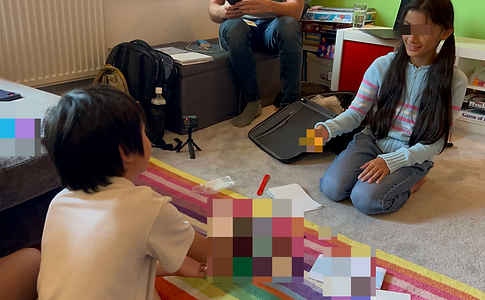
This piece of research was conducted in the form of ethnographic immersions, where we brought prototypes into children's homes to spend time with them.
-
We visited 9 families, with each visit lasting for 2 hours. These began with a tour of the children's bedrooms. Each visit consisted of three team members: the moderator, observers, and tech support. The sample size was 20 children.
-
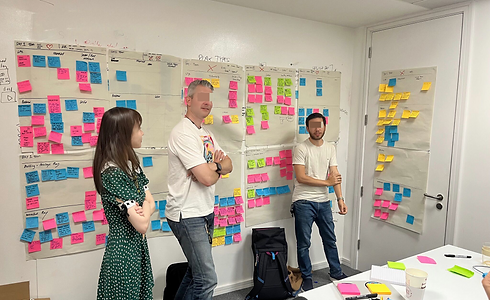
On the day following each visit, each team captured their notes based on pre-defined topics and gathered these notes on flip charts for sharing with the entire team.
-
This was repeated for 3 days of fieldwork.
-
The last day of the fieldwork included a workshop, where the team performed affinity mapping and priority mapping to ensure everyone was aligned on the next steps.

Findings*
Findings Related to Audiences:
-
Even though this specific IP is transitioning to become a more gender-neutral brand, children still perceive it as being for boys, indicating evidence of gender stigmas.
-
We discovered a potential generational influence on children's engagement with the brand, driven by their parents' nostalgia.
-
6 user persona profiles were created based on behavioral patterns and themes, for the purpose of humanising the design focus, testing scenarios, and aiding design communication.
Selected Prototype-Specific Findings:
-
When it came to playing, children were less patient with following the play instructions, often flipping through them and not treating them as a linear process.
-
This specific play concept was geared towards social play. However, children often played alone by themselves, raising questions about how they were expected to team up together.
The findings are summarised at an aggregate level to adhere to confidentiality guidelines.
Research Impact
Strategic Impact
-
Pivot the product development strategy towards engaging girls, guided by research insights.
-
Highlight the need for further research and understanding of girls, as LEGO traditionally has not performed well with this demographic. This could represent an opportunity to engage them by leveraging the IP.
Stakeholder Collaboration Impact
-
Deepen the team's understanding of audiences, making team members feel more connected to our end-users and fostering empathy.
-
Ensure everyone walked out of the fieldwork trip aligned on what the next steps were.
-
Establish research as a strategic partner of the product team.
-
Share the experience with other product teams in monthly gatherings as an exemplary piece for cross-functional collaboration and getting closer to children.
Product Impact
-
Enable designers to quickly identify blockers on their own and be receptive to iterating based on research findings.


My Learnings
-
By conducting in-home visits, we learned significantly more about the children. A tour of their bedrooms provided much richer insights into their daily lives, preferences, and play habits, far surpassing the generic understanding we would have gained by simply asking them about their favourite toys.
-
Seeing is believing! Although coordinating a team of 12 for research activities required meticulous logistical planning, it was absolutely worth the effort. The product team deepened their understanding of our audience and developed greater empathy for girls who were stigmatised by engaging with a brand perceived as "boyish." Additionally, it served as an excellent team-building opportunity, uniting everyone through research insights!
Disclaimer: Please note that the content presented here has been adjusted in accordance with confidentiality protocols.