Project 3
User Journey Mapping for LEGO Super Mario System Set: Identifying Opportunities for Future Iterations
@ The LEGO Group

Project Background
-
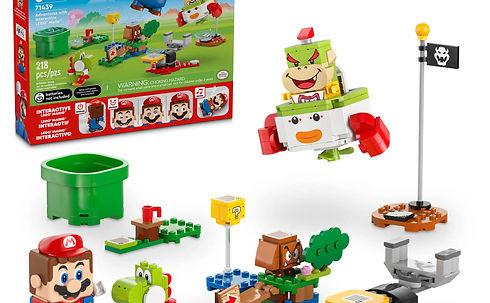
The LEGO Super Mario set, launched in 2020, represented the most significant and successful launch in LEGO's history.
-
However, data from the product's Net Promoter Score (NPS) in 2022 indicated a downward trend. Specifically, the Super Mario theme recorded the lowest novelty NPS year-to-date, experiencing a 12% decline compared to the previous year.
-
This study was part of a series aimed at investigating the reasons behind the declining sales figures and NPS scores of the LEGO Super Mario set.
Methods
The research process was carried out in two stages:
1) Product Review Analysis
-
Examined all product reviews left for the LEGO Super Mario system set on LEGO.com.
-
Identified patterns and preliminary codes (themes) for further investigation.
2) Out-of-Box-Experience Testing:
-
Based on the preliminary themes identified in Step 1, conducted tests on the "Getting Started experience" of the LEGO Super Mario starter set, from unboxing to readiness for play. The actual play experience was outside the scope of this specific research.
Sampling: 8 Sessions, 10 Participants
-
Conducted 4 individual sessions with children aged 6-11, aligning with the suggested age on the Super Mario box.
-
Engaged two parents from different families, each with children aged 6-10 not associated with the children from the first group, and with average technical abilities.
-
Included two parent-child pairs, one with a child aged 6 and the other with a child aged 9.


Findings*
-
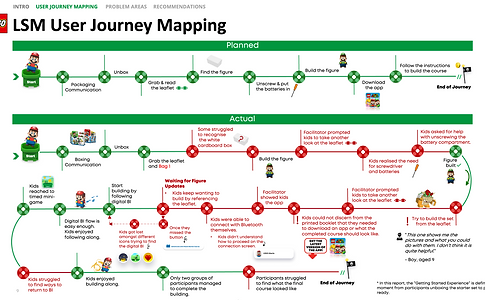
Based on the sample tested in this study, when tested with the targeted age group as indicated on the product box, it was almost impossible for children to open the box and set up the play by themselves without adult supervision.
-
The main blocker for children was the leaflet that came with the bricks, which kids expected to contain the building instructions. The text was phrased as "Get the latest version of the app." None of the children in the sample interpreted the leaflet as indicating the necessity of downloading an app.
Main Usability Issue:
-
While in-app, users could not figure out how to access the building instructions (BI). Nor did they know how to return to the BI after watching challenge videos, suggesting convoluted informational architectures.
Findings contradicted our original hypothesis:
-
As LEGO is experimenting with shifting its building instructions to an electronic format, it's not the app format that irritates users, but its navigational system (how to find the relevant BI) that confuses children. Once they got the hang of it, children were able to proceed with building without adult supervision. All children in the sample expressed a preference for electronic BI over paper after the test.
The findings are summarised at an aggregate level to adhere to confidentiality guidelines.

Research Impact
Strategic Impact
-
Counteracted the common myth among stakeholders that the decline in the product's Net Promoter Score (NPS) was due to the lack of paper building instructions. This effort helped pinpoint the real reasons behind the product's declining NPS and directed attention towards the benefits of digitising building instructions.
Stakeholder Collaboration Impact
-
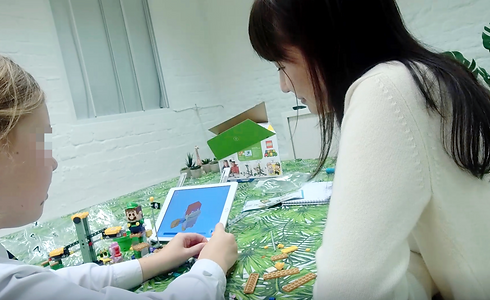
Stakeholders were invited to observe the sessions and had the opportunity to interact with children and ask questions. They were involved throughout the process, which helped integrate researchers into the team rather than being seen as outsiders taking a brief.
Product Impact
-
The findings from the study were analysed based on high priorities, normal priorities, and some quick fixes, allowing designers to strategically prioritize their work in a logical manner. Some of the quick fixes on the app interface were implemented immediately.
My Learnings
-
At LEGO, considerable effort and time were invested in developing the concept of quality play experiences, with each playset undergoing rigorous testing. However, it appears that the communication of the play wasn't as meticulously tested as the play itself. This oversight became apparent with the interactive set, which presented a novelty for children and contradicted their traditional understanding that LEGO is primarily for building, not digital interaction.
-
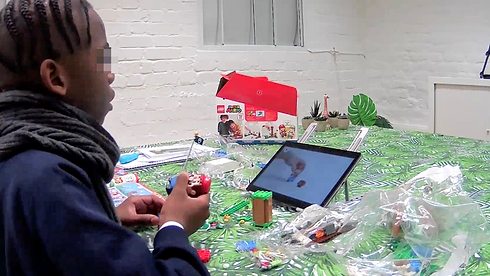
During the presentation to the designers, I sensed an expectation that I would talk over the insights rather than click on clips to show videos. Nevertheless, I insisted on playing these video clips, as watching the children struggle to navigate the app conveyed a much stronger message than if I were to simply describe it.
Disclaimer: Please note that the content presented here has been adjusted in accordance with confidentiality protocols.